

Tag: Newsletter 146 – July 2026

  • Integrating Practice‑Based Evidence and Evidence‑Based Practice in TA

    Integrating Practice‑Based Evidence and Evidence‑Based Practice in TA

    By Enrico Benelli

    Chairperson of TDRC

    In contemporary psychotherapy, two complementary paradigms guide how we understand effective treatment: Evidence‑Based Practice (EBP) and Practice‑Based Evidence (PBE). While EBP traditionally moves from research to practice, PBE brings knowledge from practice back into research.

    Together, they form a circular model that strengthens both scientific credibility and real‑world clinical relevance.

    The American Psychological Association defines EBP as the integration of:

    • Best available research,
    • Clinical expertise, and
    • Patient characteristics, culture, and preferences.

    This tripartite model emphasises flexibility, relational competence, and tailoring therapy to the individual.

    PBE complements this by grounding knowledge in the daily reality of clinical work. It values data gathered from real clients, including those with comorbidities and complex presentations, and focuses on continuous monitoring of progress, therapeutic alliance, and global functioning.

    Enrico’s article highlights the structural differences between the two paradigms. The table below summarises these distinctions and shows why integrating both is essential for modern TA practice. This comparison shows why TA benefits from a circular integration: research informs practice, and practice refines research.
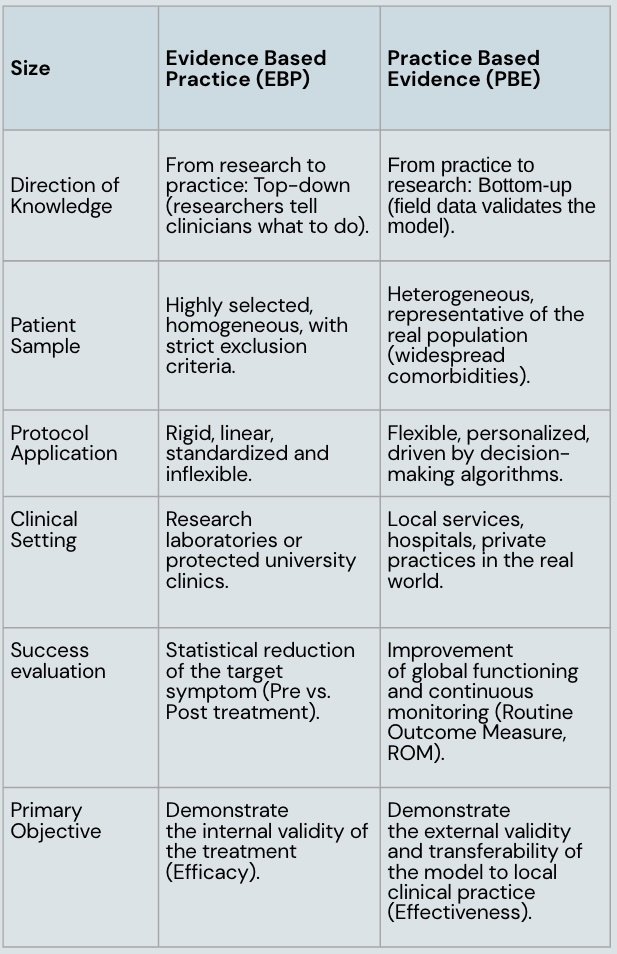
    Table 1. Evidence‑Based Practice vs. Practice‑Based Evidence

    International guidelines (APA, WHO) now emphasise that psychotherapy manuals must be:

    • Flexible and Personalised: Not rigid sequences, but adaptable principles and decision trees.
    • Able to manage Complexity and Comorbidity: Real clients rarely fit a single diagnostic category.
    • Process‑Based rather than Symptom‑Based: Focusing on mechanisms such as emotional regulation, self‑boundaries, and psychological flexibility.

    A PBE‑oriented manual therefore includes:

    • Decision algorithms to tailor interventions,
    • Routine outcome monitoring (ROM) at each session,
    • Fidelity and competence checklists,
    • Deliberate practice exercises to strengthen clinical skill.

    These elements ensure transparency, accountability, and ethical rigour; essential qualities for TA’s continued development.

    Enrico outlines a modern structure for TA manuals that aligns with international standards:

    Chapter 1 – Theoretical Rationale and Model of Change. Conceptual framework, mechanisms of change, and supporting evidence.

    Chapter 2 Clinical Assessment and Eligibility. Inclusion/exclusion criteria, case formulation, and baseline assessment tools.

    Chapter 3 – Structure of the Intervention Setting, duration, delivery format, and therapeutic contract.

    Chapter 4 – Operational Guide. Flexible phases: engagement, core intervention, consolidation, and termination.

    Chapter 5 – Managing Obstacles and Crises Alliance ruptures, repair strategies, and preventing dropout.

    Chapter 6 – Appendices and Tools. Worksheets, monitoring diaries, clinical vignettes.

    This structure supports both scientific replicability and clinical flexibility, making it suitable for real‑world TA practice.

    Enrico’s contribution offers a clear and timely framework for how TA can align with contemporary psychotherapy standards. By integrating EBP and PBE, TA strengthens:

    • Its scientific credibility,
    • Its clinical effectiveness,
    • Its ethical transparency, and
    • Its capacity to evolve within international guidelines.

    This circular approach ensures that TA remains grounded in research while staying deeply connected to the lived reality of practitioners and clients.

    For further exploration of the topic, readers are warmly invited to contact the author, who will be happy to meet and support colleagues interested in this work: tdrc.chair@eatanews.org

  • The Future of EATA

    The Future of EATA

    By Sylvia Schachner

    EATA President

    EATA’s strategy is grounded in the work we undertake today in preparation for a future that cannot yet be fully known.

    Our current priority is to build a strong and sustainable foundation by ensuring that our processes are clearly defined, adapted to today’s digital environment, well documented, and easily understood by those who will follow us. This is the purpose of the Strategy Group, which is working successfully, responsibly, and with great commitment.

    Their way of working already reflects the culture we wish to cultivate: transparent processes, shared accountability and a strong commitment to co‑creation.

    This solid foundation gives us both the energy and the freedom to take the next important steps: to make our vision for the future development of the organisation transparent and to create structures that provide sufficient flexibility to respond to an increasingly uncertain and rapidly changing environment.

    Our vision is therefore not static; it evolves as we learn, reflect and respond to the changing needs of our community. Transformation and development are accelerating through new technologies. The digital world, artificial intelligence, ChatGPT, and related innovations are far more than technical tools that simply facilitate processes. They are influencing and changing our understanding of the world in ways that are deeper and more far‑reaching than we may currently realise. These changes are already underway, and while we are still exploring their implications, further developments continue to emerge.

    One of the key tasks for the coming years will be to examine these questions and their impact as members of the Executive Committee, as trainers, trainees, and members of the wider EATA community.

    The future of EATA will be shaped by its enduring commitment to quality standards, professional development, ethical practice, and its ability to respond effectively to emerging technological and societal challenges.

    As Transactional Analysis continues to evolve within a rapidly changing world, EATA has an important role in ensuring that the profession remains relevant, rigorous, and responsive to the needs of practitioners and communities.

    Maintaining high standards in training, supervision, examination, and certification will remain a cornerstone of EATA’s work. Robust quality assurance processes help safeguard professional competence and strengthen public trust in TA practitioners across the fields of psychotherapy, counselling, education, and organisations.

    Professional development will continue to be essential. Through its support for lifelong learning, research, international collaboration, and reflective practice, EATA enables professionals to integrate new knowledge while remaining grounded in the core principles of Transactional Analysis. The development of digital learning environments and cross‑cultural competencies will further enhance the accessibility and impact of TA worldwide.

    At the same time, EATA is already addressing significant structural challenges arising from the increasing use of artificial intelligence. AI is transforming education, supervision, assessment, administration, and communication.

    These developments raise important questions concerning confidentiality, data protection, professional responsibility, bias, and the opportunities, limitations, and implications of machine‑supported decision‑making. EATA is exploring how AI can be used responsibly while preserving the relational and human‑centred foundations of Transactional Analysis.

    Another important aspect of EATA’s future is the strengthening of global professional connections. Through webinars, online learning platforms, conferences, regional events, and international networks, EATA can bring together practitioners, trainers, supervisors, and researchers from around the world.

    These opportunities for dialogue and collaboration encourage the exchange of knowledge, foster innovation, and strengthen the international TA community. By combining online accessibility with the richness of face‑to‑face encounters, EATA can create a vibrant and inclusive professional network that supports learning, belonging, and excellence.

    We are not alone in addressing these developments. They are also reflected in our ongoing collaboration with the International Transactional Analysis Association through the various structures and initiatives that we have built together over recent years.

    This exchange, which already takes place regularly, is being further strengthened through new channels of cooperation. We recognised that certain ethical challenges require dedicated pathways for communication and information sharing. A highly engaged group of members from both associations worked intensively and enthusiastically on this initiative. As a result, a memorandum of understanding has been signed to regulate and define this exchange.

    It is important to clarify that this joint committee, as well as the other committees shared between the two organisations, serves as a forum for dialogue, consultation, and exchange rather than as a decision‑making body. Decision‑making authority remains with the respective committees of each organisation.

    The strength of our future will depend on the engagement and collaboration of our entire community.

    I therefore invite all EATA members to continue on this path together and to contribute by drawing on their own strengths. I would like to extend my heartfelt thanks to everyone who is already doing so with such dedication and enthusiasm.

    Sylvia Schachner

    EATA President

  • Turning toward the future, together

    Turning toward the future, together

    Dear colleagues, friends, and members of the EATA community,

    By Eva de Kroon-van der Randen

    EATA Newsletter Editor

    In this issue, we find ourselves in a moment of looking both ways: honouring where we come from, while gently turning toward what is emerging.

    Across these pages, you may notice a movement, not a fixed plan, but a living process shaped through dialogue, collaboration, and shared responsibility.

    We invite you to read this issue not only for information, but as a reflection of a community in motion.

    Warmly, Eva